
FAQ Page
Frequently Asked Questions
-
Getting started is simple. Reach out through any of our contact forms, send us an email, schedule a call or tour—we’ll walk you through the next steps and answer any questions along the way.
-
Beginning in September 2026, Camano Forest School will be a DCYF-licensed, full day childcare program.
-
Camano Forest School is fully outdoor and nature-based, with learning that unfolds in real natural environments rather than just having occasional outdoor time like some traditional or hybrid programs. The natural world is treated as both the classroom and one of the primary teachers.
In terms of curriculum, rather than following a preset lesson plan or rigid schedule, the curriculum at Camano Forest School evolves directly from children’s interests and moment-to-moment exploration. Educators observe and respond, allowing curiosity, play, and discovery to shape what and how learning happens.
Education at Camano Forest School nurtures the whole child — not just academics, but confidence, creativity, resilience, and community stewardship. We emphasize social-emotional growth, cooperative learning, and real-world competence, all deeply connected to nature.
-
Clothing/Gear needs will vary season to season but it is important to dress your child in layers and send extra clothes and layers in their pack.
If you’re looking to purchase gear, we’ve partnered with Outdoor School Shop to create an easy way to shop gear appropriate for the PNW.
You can find a curated list here! You will receive discounts and gear support through their team.
During checkout use code:
CAMANO for 15% off your entire full price order! *discount does not apply to doorbusters, sales, or (Re)PLAY used gear.
If you have any questions about the site or need help with purchasing gear, you can email Alyssa at alyssa@outdoorschoolshop.com
-
We believe children benefit from spending time outdoors in a wide range of weather, and we plan our days thoughtfully with safety as our top priority. We monitor forecasts closely and adjust plans as needed.
Weather that may be considered dangerous includes high winds, severe storms, unsafe air quality, or other conditions that increase risk. In these cases, we may modify our plans by staying in safer, more open areas, adjusting activities, or shifting to an indoor field trip day. In rare circumstances, school may be canceled if conditions cannot be made safe.
For extreme temperatures, we focus on preparation and close observation. In cold weather, we ensure children are appropriately layered, dry, and able to warm up as needed. In warm weather, we prioritize shade, water breaks, lighter activity, and rest. Educators closely monitor children for any signs of discomfort and respond promptly.
Our goal is to create an environment where children can safely experience the outdoors while feeling comfortable, supported, and cared for.
-
Pricing is structured monthly and depends on the number of days you will enroll your child each week.
Attending 1 day per week: $300
Attending 2 days per week: $550
Attending 3 days per week: $800
Beginning in September 2026, Camano Forest School will accept Working Connections Child Care subsidies. -
No prior outdoor experience is needed. Children come to forest school with a wide range of comfort levels, and we welcome them exactly where they are.
For children who feel hesitant or uncomfortable outdoors, we take a gentle, supportive approach. Educators focus on building trust, offering choices, and allowing children time to acclimate at their own pace. Participation is never forced—children are encouraged to observe, engage in familiar activities, or take breaks as they build confidence.
With consistent routines, caring relationships, and thoughtful preparation, most children grow more comfortable and confident outdoors over time. Our goal is to help each child feel safe, supported, and capable as they develop a positive relationship with the natural world.
-
Yes. We welcome neurodivergent children and recognize that every child brings unique strengths, needs, and ways of experiencing the world. Forest school environments can be especially supportive for many neurodivergent learners due to their movement-rich, play-based, and flexible structure.
We partner closely with families to understand each child’s needs and work together to create supportive strategies within our program’s scope. While we are not a therapeutic or one-on-one support program, we are committed to creating an inclusive environment rooted in respect, relationship, and curiosity.
-
At forest school, the outdoors offers a naturally rich sensory environment, but we understand that each child experiences it differently. We support sensory needs by observing closely, offering choices, and adjusting expectations rather than forcing participation.
Children are encouraged to engage at their own pace—whether that means wearing noise-reducing gear, taking breaks in quieter spaces, or choosing activities that feel regulating rather than overwhelming. We maintain predictable rhythms, clear boundaries, and consistent adults to help children feel safe and grounded.
Our educators work to notice what helps each child feel calm and regulated and respond with flexibility, compassion, and respect. We believe that sensory needs are part of being human, and we support children in developing awareness and self-advocacy in ways that feel appropriate to their age and experience.
-
Children should arrive each day prepared for time outdoors in changing conditions. We ask that each child bring:
A backpack that fits comfortably and can be carried independently
Weather-appropriate clothing, including extra layers
Backup clothes (including socks) in case of mud or moisture or accidents
A nutritious lunch and snack
A filled water bottle
We’ll share seasonal reminders and specific clothing guidance throughout the year to help families prepare for changing weather. Our goal is to support children in staying comfortable, dry, and ready to fully engage in their day outdoors.
-
We maintain low staff-to-child ratios to ensure safety and individualized support. Ratios vary by age group and program type but always meet or exceed recommended guidelines and adhere to at maximum a 1 adult to 5 student ratio.
-
Bathroom procedures are age-appropriate and depend on the location. We use nearby restrooms, portable toilets, or nature-based toileting practices as appropriate. Privacy, dignity, and hygiene are always prioritized.
-
Yes. Parent visits or observations may be available by request or during scheduled events. We value family partnerships and open communication.
-
Staff have experience in early childhood education and/or outdoor education and complete background checks. They are trained in first aid and CPR and receive ongoing professional development related to child development, safety, and outdoor learning.
-
Children learn outdoor safety through direct instruction and modeling. This includes learning boundaries, recognizing hazards, respecting wildlife, and using tools or natural materials safely. We focus on building risk awareness rather than eliminating all risk.
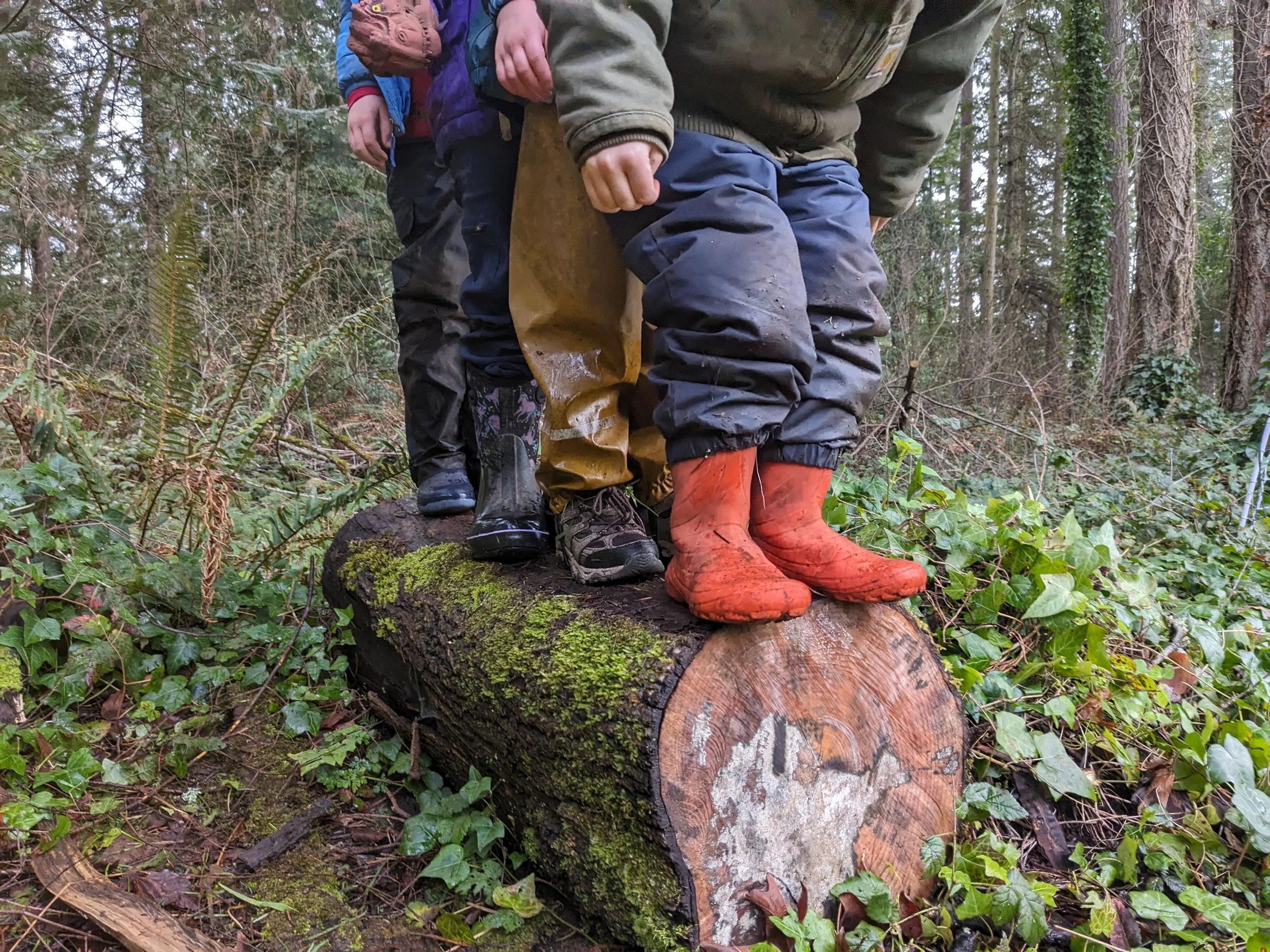
Children may explore off-trail areas and engage in developmentally appropriate climbing or balancing activities. Clear boundaries and close supervision are always in place, and children are taught how to assess risk safely.
-
Outdoor learning supports early literacy, math, and science through hands-on experiences such as storytelling, counting, measuring, observing nature, and problem-solving. Learning is experiential and developmentally appropriate.
Forest School supports skills essential for kindergarten readiness, including listening, following directions, cooperation, fine and gross motor development, and emotional regulation.